
Booksellers in shopping centres
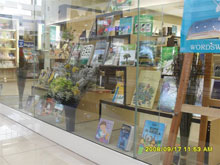
In a recent edition of the Wall Street Journal, it was reported that Barnes and Noble, the largest book retailer in the United States, plans to close 20 stores a year over the next 10 years. This frightening statistic prompted a South African Trade magazine for shopping centres (ShoppingSA) to raise the question of whether brick-and-mortar bookshops are living on borrowed time. The editor asked various booksellers and chain-outlets for their thoughts on survival against the digital onslaught of e-books, improving buying experience and the challenge of luring as many as possible feet through their doors that bring not only browsers, but buyers, and the outcome was, comfortingly, quite positive.
In South Africa, as in many new world countries where space is not really a big issue, the institution of “mall shopping” has nearly always outshone the “high street” model of shopping favoured in Europe and the UK. There are many, complex reasons for this, and most small towns have various little “shopping centres”, with bigger cities usually having two to three big malls. The owners of these centres have always paid careful attention to the retail mix included on their properties, and chain outlets were, and continue to be, especially favoured as tenants. The chains can pay higher rents than the independants, can afford to lose money in a single location until establishing a customer base, and are almost guaranteed not to go out of business, no matter how slow mall traffic is. Independent stores still have a much more difficult time winning a mall lease, and once in the mall, have a harder time staying in business.
This is also true for booksellers, and of the five booksellers they spoke to, it was only the independent/small-chain that had doubts about its future, with plans to close down at least one of its shops’ doors. Of the smaller chains and independants, Bookdealers (with seven stores around Johannesburg, all but one located in malls) felt that high rental prohibited them from expanding to other malls. The biggest of the chains is Bargain Books, with about 63 stores nationwide, all located within shopping centres and malls.
Linda Nell, Marketing manager for Bargain Books, was optimistic about their future, stating that there are no plans for closing any of the shops, and even plans for expanding to the Free State and Johannesburg. Second biggest was Exclusive books, with 45 stores throughout South Africa, who also have on-going plans for new stores in shopping centres, based and carefully planned around demographic representation, foot traffic counts and tenant mixes. Although there are no plans for closing any of their stores, when the profile of a mall changes and causes a store to underperform for an extended period of time, they will close shop. Steve Davies, of The Bay Bookshops in Cape Town, said that they may have to consider closing one of their shops due to mounting pressures from high rental. According to Davies, margins on books are low and rents are high, and only volume sales can offset this – over the years newcomers to the book value chain (supermarkets creaming off big titles etc.) have chipped away at more traditional booksellers’ margins and volume. With online and e-reader sales, it’s becoming a rout, and, feels Davies, the digital migration is here to stay. Shelf space for books has diminished over the past two years, with Bay Books devoting more space to non-books merchandise. Exclusives also has had great success with selling book-related products, like stationery, gifts and games, with the ratio of books to book related products unique for each location, according to their customer profiles. Bargain Books have always carried box sets which contain books and related non-book items in the children’s and adult sections. Wordsworth – a chain focussed in the Western Cape with seven stores all in big shopping centres – has dimished its shelfspace for books, but with clever shopfitting they are able to trade more densely, not wasting any space. Along with this, Managing Director Andrew Marjoribanks feels that having good staff who are avid readers is paramount, as they are able to make intelligent suggestions (enhancing book discovery) and direct customers to the right place. Among non-book items that do well in their stores are things like specialist good quality gift stationery, and audio books.
Bookdealers owner Doron Locketz believes that there will always be a market for physical books, especially older, or collectable books that are not available as e-books. Although e-book sales in South Africa have shown a marked growth in South Africa over the last two years especially, there is still a demand for print books. Fiction is a category which has seen a marked rise in e-book sales and a corresponding drop in print sales. Linda Nell of Bargain Books comments; “The international trend seems to be that demand for digital is stabilising; however in South Africa it is still growing. It stands to reason that, especially with prices of print books in South Africa such as they are, and with tablets becoming more and more affordable and prolific, the consumption of e-books will increase.”
A good bookshop in a centre is a sign of quality and many malls do realise this. They understand and appreciate the status that a quality bookshop lends to a centre. Books say a lot about your place in life, and for a reluctant visitor to a busy mall, there’s no such place as the bookshop.

Leave a Reply
Want to join the discussion?Feel free to contribute!